




Introduction – The Eternal Elegance of Mughal Art in Delhi
Amid the vibrant rhythm of Delhi’s urban life stands a timeless masterpiece — Humayun’s Tomb, a monument that bridges India’s glorious Mughal past with the present. Built in the 16th century, this UNESCO World Heritage Site is not only a marvel of architecture but also a symbol of love and devotion. Commissioned by Empress Bega Begum, the chief consort of Emperor Humayun, this tomb marked the beginning of a new architectural era in India — one that ultimately led to the creation of the Taj Mahal.
Every corner of Humayun’s Tomb tells a story — of artistry, spirituality, royal love, and the brilliance of Indo-Persian craftsmanship. Let’s explore this incredible monument, its history, design, nearby attractions, and everything you need to plan your visit.
1. Historical Background – The Emperor and His Legacy
After Emperor Humayun’s death in 1556, his widow, Empress Bega Begum (Hajji Begum), took it upon herself to immortalize his memory through an architectural wonder. The tomb was designed by Mirak Mirza Ghiyas, a Persian architect chosen for his expertise in Persian and Islamic design. Construction began in 1565 and completed around 1570, making it one of the earliest examples of garden-tomb architecture in India.
What makes Humayun’s Tomb historically significant is that it was the first structure to combine Persian symmetry with Indian craftsmanship, setting the foundation for future Mughal monuments, including the Taj Mahal in Agra.
2. Architectural Brilliance – The Indo-Persian Marvel
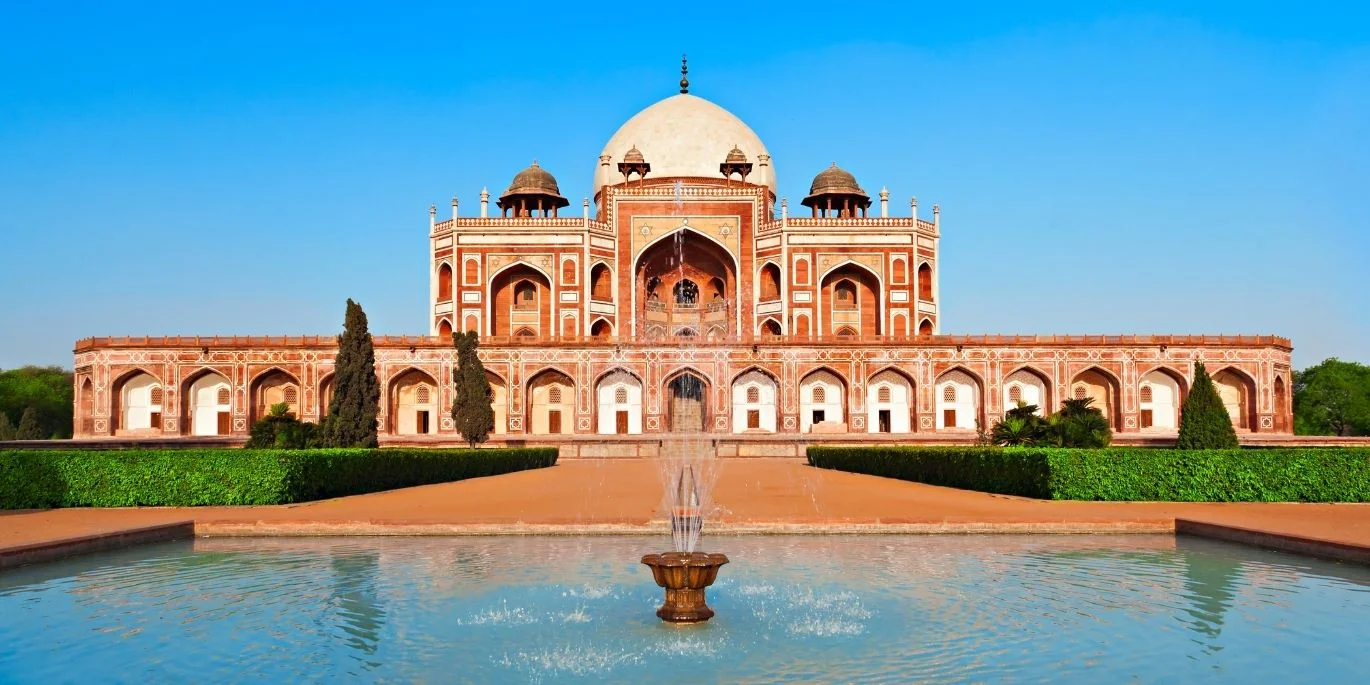
Humayun’s Tomb stands as a masterpiece of Mughal architecture, harmoniously blending Persian, Central Asian, and Indian influences. The structure sits majestically in the center of a Charbagh (four-quartered Persian garden), divided by walkways and water channels representing paradise as described in Islamic texts.
Key Architectural Highlights:
- The tomb is constructed primarily from red sandstone with white and black marble detailing.
- The central dome, rising to nearly 42 meters, is double-layered and made entirely of white marble.
- The façade is ornamented with intricate lattice work, arches, and geometric symmetry.
- The tomb chambers below house not only Emperor Humayun’s cenotaph but also graves of various Mughal nobles and family members.
The combination of symmetry, garden design, and monumental scale make Humayun’s Tomb a blueprint of Mughal grandeur that influenced architecture across India.
3. The Charbagh Garden – Paradise on Earth
One of the most captivating aspects of the monument is its Persian-style garden layout, known as the Charbagh. The term translates to “Four Gardens,” representing the four rivers of paradise in Islamic belief.
Each quadrant is meticulously divided by water channels and stone pathways, leading to the central mausoleum. This architectural symbolism of life, death, and rebirth showcases the deep spirituality embedded within Mughal design.
The sound of flowing water and the reflection of the dome in the water channels evoke an overwhelming sense of peace — making Humayun’s Tomb not just a burial site but a symbol of eternal tranquility.
4. The Tomb Complex – More Than a Monument
The Humayun’s Tomb complex includes several smaller monuments and structures, each with its unique story:
- Isa Khan’s Tomb: Built before Humayun’s Tomb, this pre-Mughal octagonal tomb stands as an architectural gem from the Sur dynasty era.
- Arab Serai: A caravanserai built to house the Persian artisans and workers during construction.
- Nila Gumbad: Recognized by its striking blue dome tiles, it adds a pop of color to the red sandstone landscape.
- Bu Halima’s Garden Tomb: Another beautiful, smaller structure located at the entrance, adding depth to the site’s history.
Together, these structures make the Humayun’s Tomb complex a living museum of early Mughal architectural evolution.
5. Restoration and UNESCO Recognition
In 1993, Humayun’s Tomb was declared a UNESCO World Heritage Site for its outstanding cultural and architectural value. Over the years, it underwent several restoration projects — most notably by the Aga Khan Trust for Culture (AKTC) and the Archaeological Survey of India (ASI).
These initiatives have restored the Charbagh gardens, water channels, and marble inlays to their original splendour. Today, the site stands not only as a monument of the past but also a shining example of how heritage can be preserved through care and collaboration.
6. Humayun’s Tomb and the Taj Mahal – The Connection
Architecturally, Humayun’s Tomb inspired the design of the Taj Mahal in Agra, which was built almost 80 years later. Both share similar features — the use of white marble, symmetrical layout, elevated platforms, domed structure, and garden tomb concept.
Humayun’s Tomb, therefore, is often called the architectural ancestor of the Taj Mahal, bridging the early Mughal and high Mughal styles.
7. Visiting Information – How to Reach and Best Time
📍 Location:
Mathura Road, Nizamuddin East, New Delhi, India
🕰️ Timings:
Open daily from 6:00 AM to 6:00 PM
🎟️ Entry Fees (Approx):
- Indian Citizens: ₹30
- Foreign Nationals: ₹500
- Children below 15: Free
🚇 How to Reach:
- By Metro: Nearest station – JLN Stadium (Violet Line) or Jangpura.
- By Bus/Cab: Easily accessible via local cabs, autos, or bus routes from central Delhi.
🌤️ Best Time to Visit:
- October to March (pleasant weather for exploration).
- Early morning or late afternoon for beautiful lighting and fewer crowds.
8. Photography & Travel Tips
- Visit early in the morning for perfect lighting and peaceful surroundings.
- Drones are not permitted inside the complex.
- Carry a water bottle, hat, and comfortable footwear.
- Photography is allowed; professional shoots require permission.
- Don’t miss the sunset view from the Charbagh pathways — a photographer’s dream.
9. Nearby Attractions
Make your visit even more rewarding by exploring nearby landmarks:
- Nizamuddin Dargah: Just a short walk away, a famous Sufi shrine offering a unique cultural experience.
- Purana Qila (Old Fort): Another Mughal-era monument nearby with boating facilities.
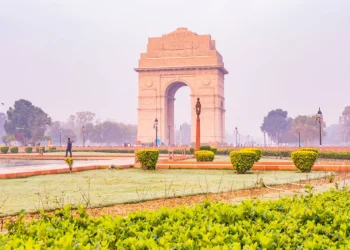
- India Gate: Iconic war memorial, just 15 minutes away.
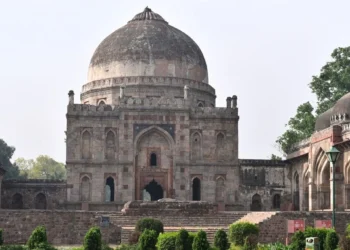
- Lodhi Gardens: A green oasis filled with ancient tombs and jogging paths.
10. Interesting Facts About Humayun’s Tomb
- It was the first garden-tomb built on the Indian subcontinent.
- The structure took nearly 8 years to complete.
- The tomb’s dome is double-layered, allowing for both aesthetic and structural balance.
- Several Mughal emperors, including Bahadur Shah Zafar’s descendants, are buried here.
- The tomb was used as a refuge during the 1857 revolt.
- The garden design symbolizes paradise as described in Islamic texts.
- Its architect, Mirak Mirza Ghiyas, was from Persia (modern Iran).
- The monument inspired the Taj Mahal’s design philosophy.
- The tomb survived centuries of neglect before modern restoration.
- Its symmetry and serenity make it one of Delhi’s most photographed sites.
11. Why You Must Visit Humayun’s Tomb
Humayun’s Tomb is not merely a monument — it’s a journey through time. Every stone, dome, and garden pathway whispers stories of Mughal glory and artistic devotion. Whether you’re a history buff, architecture lover, photographer, or casual traveller, the tomb offers a deep, peaceful connection to India’s royal heritage.
It’s a perfect blend of spiritual calm and architectural grandeur, making it one of the best places to visit in Delhi.
Conclusion – The Timeless Soul of Delhi
Standing tall amidst Delhi’s urban skyline, Humayun’s Tomb represents the beginning of a golden age in Indian architecture. It’s more than an emperor’s resting place — it’s a masterpiece that celebrates love, beauty, and the harmony between man and nature.
A visit to Humayun’s Tomb connects you to centuries of history, art, and human spirit that continue to inspire the world.