




Introduction – A Heritage Oasis in the Heart of Delhi
In a city that thrives on motion, Lodhi Garden offers a peaceful pause. Located between Khan Market and Safdarjung Tomb, Lodhi Garden is one of Delhi’s most beloved green spaces a seamless blend of history, architecture, and nature. Spread over 90 acres, it houses magnificent 15th-century tombs from the Lodhi dynasty, lush gardens, lakes, walking paths, and art installations. Whether you are a morning jogger, history enthusiast, or photography lover, Lodhi Garden has something timeless for you.
More than a park, Lodhi Garden is a living museum of Delhi’s medieval architecture—a tranquil escape that whispers stories of the sultans who once ruled from here.
Historical Significance – The Legacy of the Lodhi Dynasty
Lodhi Garden is named after the Lodhi dynasty, which ruled parts of North India during the 15th and 16th centuries before the rise of the Mughals. The garden is home to several monuments and tombs built between 1400–1526 CE.
Key highlights include:
- Mohammed Shah’s Tomb (1444 CE): The earliest structure in the park, built for the third ruler of the Sayyid dynasty. Its domed architecture and decorative chhatris set the template for Indo-Islamic funerary design.
- Sikandar Lodhi’s Tomb: The resting place of the second ruler of the Lodhi dynasty. It’s enclosed within a square garden—one of the earliest examples of the Charbagh layout later seen in Mughal gardens.
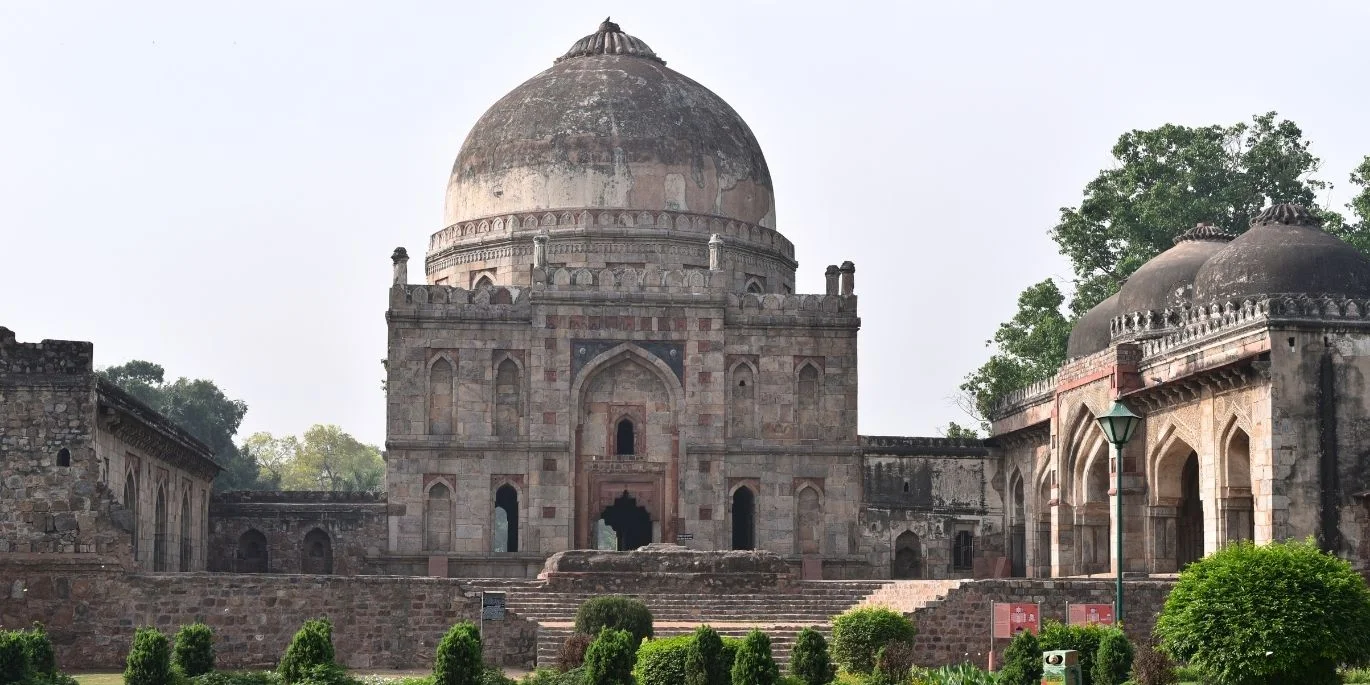
- Bara Gumbad and Sheesh Gumbad: Two striking domed buildings that showcase intricate plasterwork and calligraphy. The Bara Gumbad Mosque, adjacent to the tomb, is known for its elaborate mihrabs and decorative motifs.
Each monument here represents the transition between Sayyid, Lodhi, and Mughal architectural styles, marking the evolution of Delhi’s design identity.
Architecture & Layout – Mughal Grandeur Meets Natural Harmony
Lodhi Garden’s charm lies in its fusion of built heritage and green space.
- Design: The garden was redesigned in 1936 by Lady Willingdon, wife of the then British Viceroy. It was initially called “Lady Willingdon Park” before being renamed Lodhi Garden after India’s independence.
- Layout: The park follows a natural landscape pattern, with walking paths, water bodies, bridges, and open lawns.
- Structures: Each tomb features octagonal domes, arches, stone jaalis, and Islamic motifs. The Bara Gumbad Mosque is particularly known for its geometrically patterned ceilings and calligraphic inscriptions.
- Flora & Fauna: The garden has over 100 species of trees and plants, making it a mini urban forest. You can spot parakeets, hornbills, and peacocks during early hours.
Together, the symmetry of the tombs and the asymmetry of the foliage create a unique aesthetic harmony that makes Lodhi Garden one of the most photogenic places in Delhi.
Things to Do at Lodhi Garden
Lodhi Garden is not just a historical site—it’s an experience that caters to different interests.
Morning Walks & Yoga
Locals frequent the garden at dawn for walks and yoga sessions amid lush greenery. The calm environment and fresh air make it a wellness hotspot.
Photography & Architecture Tours
From sunrise glows on domes to reflections in the lake, Lodhi Garden is a photographer’s paradise. Architecture enthusiasts can join guided heritage walks by INTACH or Delhi Heritage Tours.
Picnics & Reading Corners
Families and students gather here on weekends to picnic under ancient trees or read near the lotus ponds.
Art & Events
Occasionally, you’ll find art installations, nature workshops, and open-air concerts hosted within the park’s premises.
Birdwatching
Early mornings and late afternoons attract numerous birds—ideal for birdwatchers.
How to Reach Lodhi Garden
Location: Lodhi Road, between Safdarjung Tomb and Khan Market, New Delhi
Nearest Metro Stations:
- Jor Bagh Metro Station (Yellow Line) – 1 km away
- Khan Market Metro Station (Violet Line) – 1.2 km away
By Road: Easily accessible via Lodhi Road and Max Mueller Marg. Parking is available near the entry gates.
By Bus: Several DTC buses connect Lodhi Road and Safdarjung Tomb areas.
Best Time to Visit Lodhi Garden
The garden is open all year, but the best time to visit is October to March, when Delhi’s weather is pleasant.
- Morning hours: Ideal for walks, yoga, and sunrise photography.
- Evening hours: Perfect for picnics and strolls.
- Monsoon season (July–September): The garden turns even more lush, though humidity can be high.
Timings: 6:00 AM – 8:00 PM (Open daily)
Entry Fee: Free
Nearby Attractions
Enhance your Lodhi Garden experience by exploring nearby gems:
- Safdarjung Tomb: A Mughal-era masterpiece located just 1 km away.
- Khan Market: One of Delhi’s most upscale shopping areas, perfect for coffee and brunch.
- India Habitat Centre: For art exhibitions, cafes, and cultural events.
- India Gate & Rashtrapati Bhavan: Within a short 10-minute drive.
Travel Tips for Visitors
- Best Time: Early morning or evening to avoid crowds and heat.
- Carry: Water bottle, hat, and camera.
- Dress Code: Comfortable, modest clothing.
- For Tourists: Hire a guide or download an audio tour for historical context.
- Eco-Friendly Note: Do not litter or step on the protected monuments.
- Safety: The park is safe but avoid secluded areas after dark.
Interesting Facts about Lodhi Garden
- Lodhi Garden has been featured in several Bollywood movies and photo shoots.
- The Athpula Bridge, an eight-pier stone bridge from Akbar’s era, connects parts of the garden across a lake.
- The tomb of Sikandar Lodhi is said to have inspired the design of Humayun’s Tomb.
- The garden hosts Delhi’s elite morning joggers and diplomats, being located near embassies.
- In spring, the garden bursts into bloom with bougainvillaea, marigolds, and amaltas.
Lodhi Garden for Photographers
Lodhi Garden offers every mood a photographer dreams of:
- Golden Hour: Best for dome silhouettes and long shadows.
- Macro Photography: Flowers, leaves, and butterflies abound.
- Architectural Shots: Experiment with symmetry and leading lines of arches.
- Night Photography: While the garden closes by 8 PM, twilight shots of the domes are magical.
Tip: Visit on a weekday for fewer people in your frames.
The Soul of Lodhi Garden – Past Meets Present
Lodhi Garden isn’t frozen in history—it lives in the rhythm of Delhi. Every path echoes centuries of stories: of rulers, poets, lovers, and wanderers. Today, it bridges eras—offering serenity to joggers, beauty to photographers, and meaning to those who seek peace in the city’s chaos.
It remains one of Delhi’s most cherished green lungs, where heritage and nature breathe together in harmony.
Conclusion
Whether you’re a first-time visitor to Delhi or a long-time resident, Lodhi Garden offers timeless charm. The gentle blend of Mughal-era tombs, landscaped lawns, and fluttering birds creates a poetic backdrop that soothes the soul.
It’s not just a park—it’s a living heritage, a reflection of Delhi’s evolving identity from Sultanate grandeur to modern urban grace.
So next time you visit the capital, skip the noise of Connaught Place for a while—take a walk through Lodhi Garden, and let history and nature speak to you.