


Introduction – Where Enlightenment Was Found
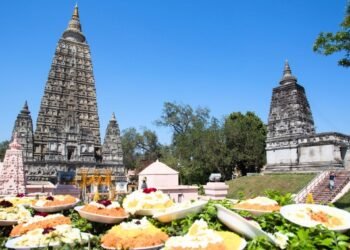
In the quiet plains of Bihar, India, stands a monument of profound spiritual significance: the Mahabodhi Temple in Bodh Gaya. It is here, according to tradition, that Prince Siddhartha Gautama sat beneath the Bodhi Tree and attained enlightenment, becoming the Buddha. The temple complex, now recognized as a UNESCO World Heritage Site, offers more than history — it is a living place of meditation, pilgrimage and global Buddhist devotion. Whether you are a spiritual seeker, a history lover, or a curious traveller, this guide will accompany you through the story, architecture, travel tips, and experience of the Mahabodhi Temple.
1. Historical Significance – The Moment That Changed the World
The site of the Mahabodhi Temple marks one of the most pivotal events in world spiritual history: the enlightenment of the Buddha. According to Buddhist tradition, around 589 BCE, Siddhartha Gautama meditated under the sacred Bodhi Tree at Bodh Gaya until he achieved full awakening.
Scholars trace the earliest shrine built on this site to the Mauryan Emperor Ashoka around 250 BCE. Over centuries, the site evolved, was refurbished in the Gupta period (5th–6th century CE) and became a pilgrimage hub for Buddhist monks and scholars from across Asia. In 2002 it was declared a UNESCO World Heritage Site for its cultural and architectural value.
Over two millennia, the Mahabodhi site has witnessed devotion, decay, revival and global recognition. Today, it continues to draw pilgrims and tourists from all corners of the world — a testament to its enduring importance.
2. Architectural Brilliance – Form, Symbolism & Structure
The Mahabodhi Temple is not only spiritually significant but also architecturally remarkable. The present visible structure dates principally from the Gupta period (5th–6th century) and is among India’s earliest surviving brick monuments.
Key Architectural features to note:
- The central tower rises to approximately 55 metres in height.
- Four smaller towers surround the main spire, forming a symmetrical layout characteristic of Buddhist temple design.
- The complex retains ancient railings, stupas, the Bodhi Tree (a descendant of the original tree), and the Vajrasana (“diamond throne”) — the exact spot where the Buddha is said to have sat in meditation.
- Use of brickwork and delicate stone carvings reflects high craftsmanship and cross-cultural influences (Indian, Gandharan, Himalayan).
Walking the precincts, the temple’s form conveys meaning: the soaring spire symbolises spiritual ascent; the Bodhi Tree ground links to rooted awakening; the open grounds allow for meditation and movement. It’s a space built both for vision and inner experience.
3. The Temple Complex & Surroundings
Beyond the core temple, the Mahabodhi complex includes an array of sacred features: the Bodhi Tree garden, lotus pond, multiple small shrines and international Buddhist monasteries.
Visitors often find stillness under the Bodhi Tree — itself a pilgrimage icon. The lotus pond nearby and the meditation lawns reinforce the sense of this being more than a monument, but a living site of faith. Each early morning and evening, monks from various traditions chant, mediate, and walk the grounds in prayer.
The presence of international Buddhist centres (Thai, Japanese, Tibetan) around the site emphasises the global nature of the pilgrimage — millions of miles of faith converge here to this single location.
4. Visiting Information – How to Get There, Best Time, Access
Location: Bodh Gaya, Gaya district, Bihar, India.
Nearest Airport: Gaya International Airport (approx 10-12 km away)
Rail/Road Access: Bodh Gaya is well connected by train and road from Patna, Kolkata, New Delhi, Varanasi etc.
Best Time to Visit: September to April offers cooler climate and clearer skies.
Entry: The temple complex is open daily; check local timings and visitor rules (especially for meditation halls).
Local Conduct & Clothing: Visitors should dress modestly; remove shoes in sacred areas; maintain silence or speak softly. Arrive early morning for less crowd and best lighting for photos.
5. What to See & Experience
- The main temple and tower: Take time to walk around, observe carvings, inscriptions and ascend if permitted for views.
- Under the Bodhi Tree: Many visitors sit in quiet reflection beneath its shade — a powerful moment of connection.
- Meditation and Chanting: Witness monks from many nations chanting; join mindfulness sessions if available.
- Surrounding Monasteries: Exploring Thai, Tibetan, Japanese monasteries adds cultural layers.
- Photography & Sunset: The spire glows softly at dusk — perfect for visual memories.
- Local Markets & Souvenir Shops: Outside the complex you'll find stalls offering Buddhist artifacts, prayer flags, books and more.
6. Culture, Pilgrimage & Spiritual Insight
Visiting Mahabodhi Temple is as much about internal experience as external sight-seeing. Pilgrims walk the sacred path remembering the Buddha’s transformation from seeker to enlightened one. The architecture, gardens and rituals all support this journey.
For many, this site becomes a moment of introspection: witnessing the embodiment of awakening in a physical space encourages thought about personal transformation, mindfulness and the nature of faith.
The spiritual ambience is enriched by the world-wide community that visits here: monks from Korea, Japan, Thailand and beyond, all gathering at this one site reminds the visitor of the universal, human search for meaning.
7. Preservation & Modern Challenges
As a UNESCO World Heritage Site, the Mahabodhi Temple complex is subject to preservation efforts to maintain its physical and spiritual integrity.
Challenges include managing large pilgrim footfall (especially at the Bodhi Tree), controlling modern intrusions in the surroundings, ensuring structural health of ancient bricks, and balancing local tourism with pilgrimage atmosphere. Experts have recommended measures like limiting visitor density around the tree, restoring ancient stone flooring, monitoring soil health beneath roots of sacred trees.
These ongoing efforts mean that visitors should treat the place gently — follow signage, respect restricted zones, and contribute to preservation by behaving responsibly.
8. Nearby Attractions & Travel Extensions
If your itinerary allows, include nearby heritage-spots:
- Bodh Gaya town itself has local markets, pilgrimage facilities and modest accommodations.
- Bodh Gaya Precincts: Explore nearby monasteries and meditation centres.
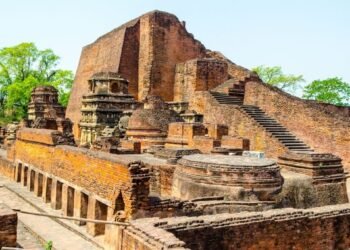
- Other Buddhist Circuit Sites: Consider visiting Sarnath, Nalanda and Rajgir as part of a broader Buddhist heritage trip.
- Local Cuisine and Culture: Stay overnight near the temple to absorb the evening chanting and early dawn serenity.
9. Interesting Facts & Highlights
- The Mahabodhi Temple’s central spire stands around 55 metres tall, making it a striking skyline in Bodh Gaya.
- The Bodhi Tree in the complex is believed to be a direct descendant of the tree under which the Buddha was enlightened.
- The site has been a place of pilgrimage for over 2,000 years, with medieval Chinese pilgrims leaving inscriptions here.
- Architectural design from the Mahabodhi Temple influenced later Buddhist and Hindu temple forms in the Indian subcontinent.
- Evening and night at the temple complex deliver a different experience: lights, lamps and contemplative ambience. Photographers and pilgrim alike often stay until dusk.
- The temple’s management and preservation have been areas of active debate and reform to ensure that both heritage and pilgrimage needs are served.
10. Why You Should Visit Mahabodhi Temple
Visiting the Mahabodhi Temple offers more than sightseeing — it’s an encounter with human history, spirituality and architecture. Whether you’re on a pilgrimage path, a heritage-tour, or simply seeking a memorable travel experience, this site resonates with depth.
Standing where the Buddha is said to have awakened invites reflection. The still garden, the spire reaching to the sky, the quiet of the temple — all converge. It’s not only about what you see, but what you feel.
For travelers to India seeking meaningful destinations beyond the usual tourist circuit, the Mahabodhi Temple stands out — it is timeless, powerful and intimately connected to world heritage.
Conclusion – A Journey of Insight
From the moment you walk through the gates of the Mahabodhi Temple complex, you step into a realm where history, faith and architecture converge. The spire, the Bodhi Tree, the meditative lawns — the place evokes calm and awe.
Allow yourself time — longer than a quick photo-stop. Arrive early, stay for the golden hour of the evening, and linger under the tree. Let the site sink in. In doing so, you don’t simply visit a monument; you engage with centuries of human longing for awakening and understanding.